Matthew Correia

HOME

Portfolio

Contact

CV

Case Studies

Case-studies from SAP Signavio

01

Suite Approval Foundations

01

Suite Approval Foundations

01

Suite Approval Foundations

02

Change Propagation

02

Change Propagation

02

Change Propagation

03

Design System

03

Design System

03

Design System

04

Read-Confirmation

04

Read-Confirmation

04

Read-Confirmation

05

Governance App Modernisation

05

Governance App Modernisation

05

Governance App Modernisation

01 /

Highlights

SAP

Out-of-context visual highlights from my time at SAP

Required roles moved into the workflow and surfaced directly during approval submission. Existing attribute mappings remained supported.
Interactive prototype flow, covering creation of confirmation requests, supporting either users or groups. Includes selection, presentation, and confirmation before changing list type.
Approval submission evolved from fragmented legacy setup into a focused workflow-selection and participant-assignment flow.
Selected screens from the updated Process Governance app. The focus was on consistent navigation, page layout, connecting user-flows, improving task completion time, data management UX, and consistency with the cross-product suite design system.
The Hub experience kept process context beside a structured change list: owners could accept or ignore reliable automatic updates, coordinate remaining manual work, and inspect propagation decisions in History. The review surfaces shipped first, with the fuller History view following shortly afterwards.
A final configuration modal integrated into Process Collaboration Hub, showing recipient selection and request setup in the context of a published process.
Input-component specifications documenting field spacing, labels, states, examples, and related controls for consistent implementation.
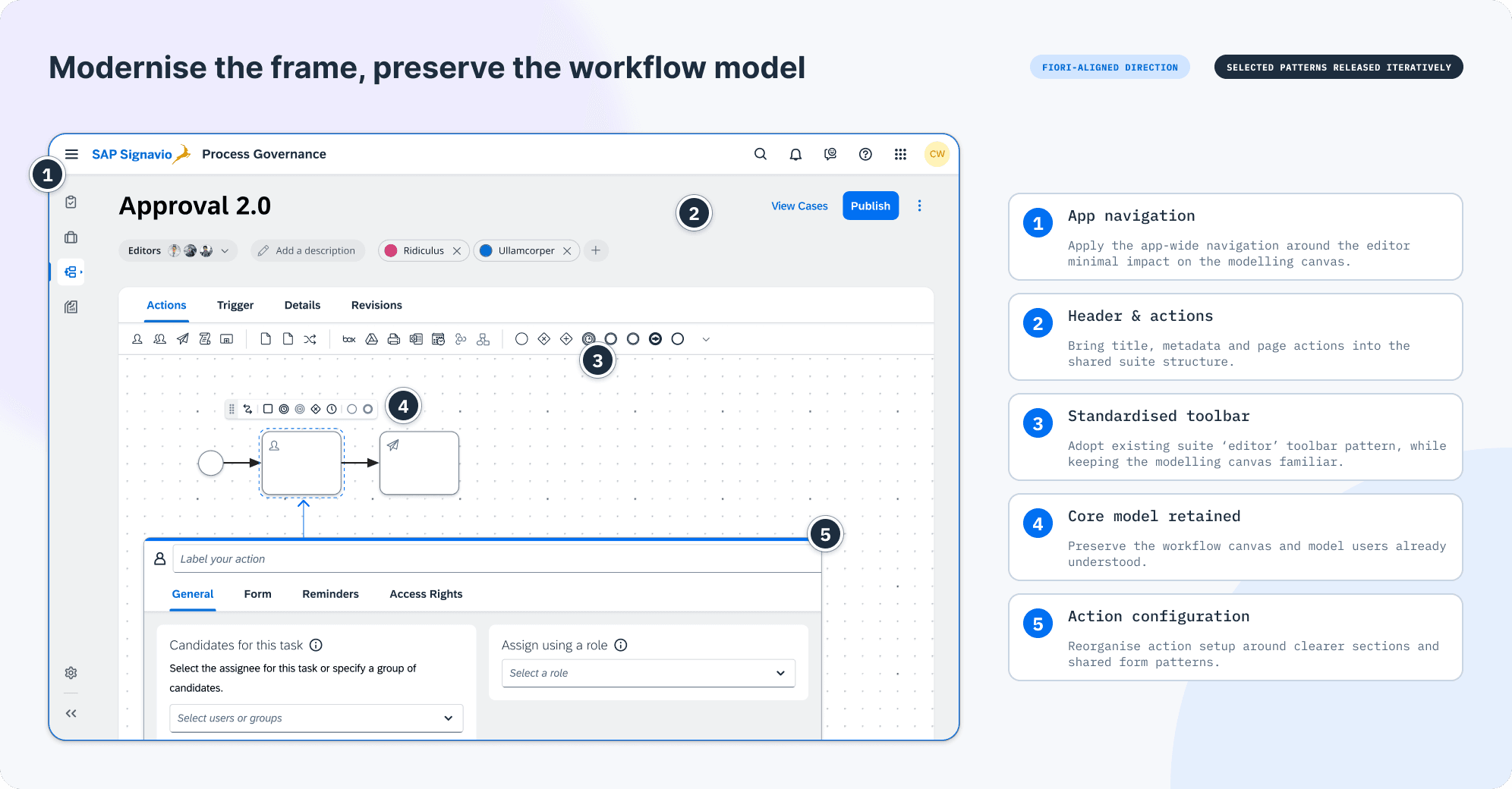
Selected before-and-after screens, showing how legacy Process Governance app screens were modernised into cleaner experiences. The focus was on consistent navigation, page layout, connecting user-flows, improving task completion time, data management UX, and consistency with the cross-product suite design system.
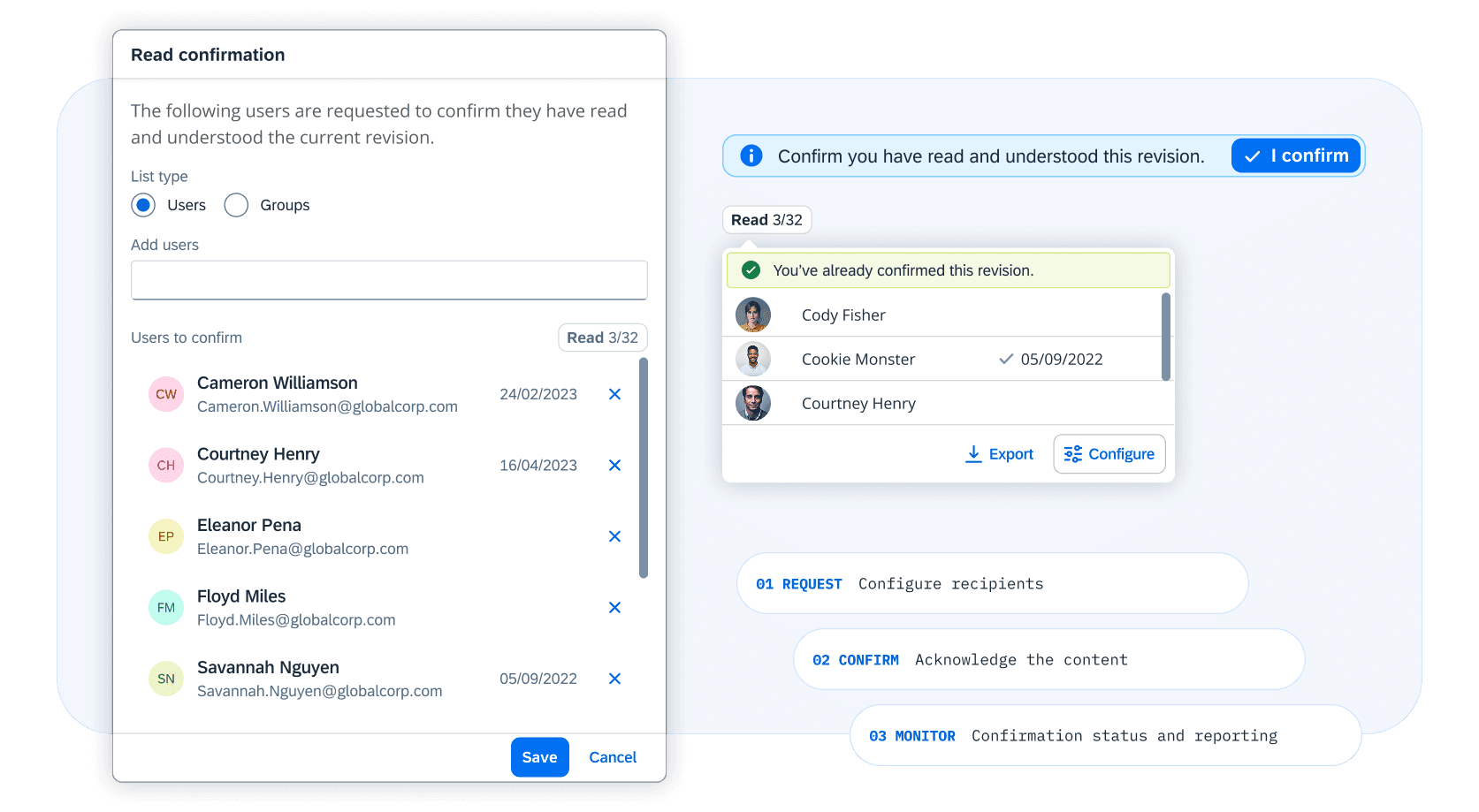
A overview of highlighted design atrefacts from this project: Request configuration, call-to-action banner for acknowledgement, and progress monitoring.
A token and theming artefact showing how Glucose Figma components were adjusted and mapped to support future SAP alignment. I built most of the Glucose components and variants myself to support the design team in moving from Sketch to Figma, and collaborated on the re-skin project and SAP Fiori adoption strategy.
Design-system specifications for tags, chips, and popovers, covering spacing, states, controls, and reusable interaction patterns.
Required roles moved into the workflow and surfaced directly during approval submission. Existing attribute mappings remained supported.
A overview of highlighted design atrefacts from this project: Request configuration, call-to-action banner for acknowledgement, and progress monitoring.
A final configuration modal integrated into Process Collaboration Hub, showing recipient selection and request setup in the context of a published process.
Approval submission evolved from fragmented legacy setup into a focused workflow-selection and participant-assignment flow.
Design-system specifications for tags, chips, and popovers, covering spacing, states, controls, and reusable interaction patterns.
Selected before-and-after screens, showing how legacy Process Governance app screens were modernised into cleaner experiences. The focus was on consistent navigation, page layout, connecting user-flows, improving task completion time, data management UX, and consistency with the cross-product suite design system.
The Hub experience kept process context beside a structured change list: owners could accept or ignore reliable automatic updates, coordinate remaining manual work, and inspect propagation decisions in History. The review surfaces shipped first, with the fuller History view following shortly afterwards.
Interactive prototype flow, covering creation of confirmation requests, supporting either users or groups. Includes selection, presentation, and confirmation before changing list type.
A token and theming artefact showing how Glucose Figma components were adjusted and mapped to support future SAP alignment. I built most of the Glucose components and variants myself to support the design team in moving from Sketch to Figma, and collaborated on the re-skin project and SAP Fiori adoption strategy.
Input-component specifications documenting field spacing, labels, states, examples, and related controls for consistent implementation.
Selected screens from the updated Process Governance app. The focus was on consistent navigation, page layout, connecting user-flows, improving task completion time, data management UX, and consistency with the cross-product suite design system.

02 /

Archive

Ad2games

Ancient artefacts from my time at Ad2games

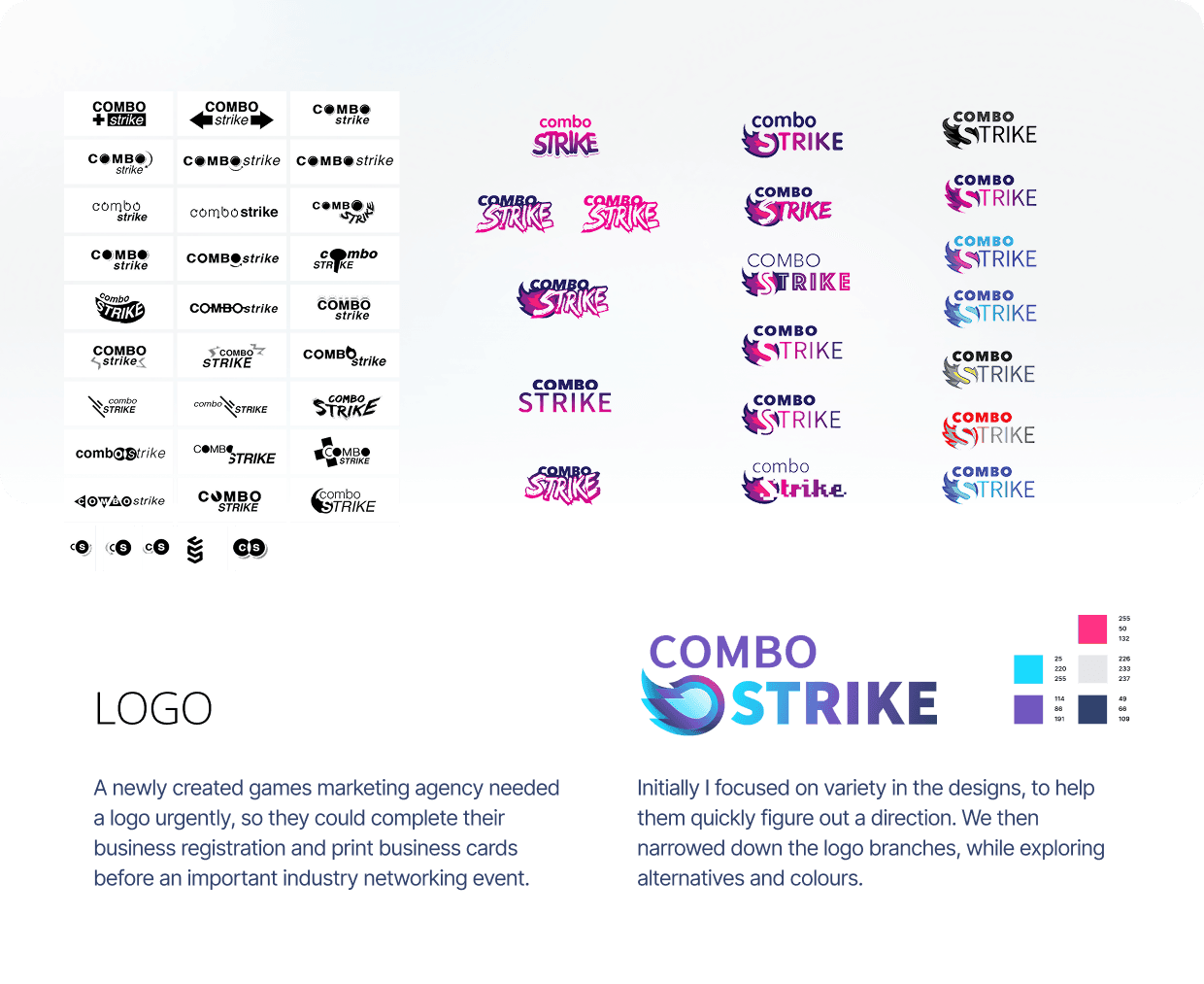
Logo exploration for ComboStrike, moving from diverse concepts toward a more focused identity for the newly created games influencer marketing agency.
An initial landing-page concept for ComboStrike Group, introducing a gaming-focused marketing agency and its related brands while leaving room for future expansion.
I designed and coded the front-end for the Ad2games website, presenting the company’s game marketing offering, publisher and advertiser value propositions, client testimonials, portfolio of notable games, news, and contact paths.
A minimal landing page for Nevaly, when the company was first launched, positioning the platform as a way for YouTube, Twitch, and streaming creators to connect with games publishers and monetise content. The background was a looped video of promoted Twitch streams, with a stylised overlay pattern to disguise compression artefacts and maintain focus on the foreground interface. I designed and coded the page.
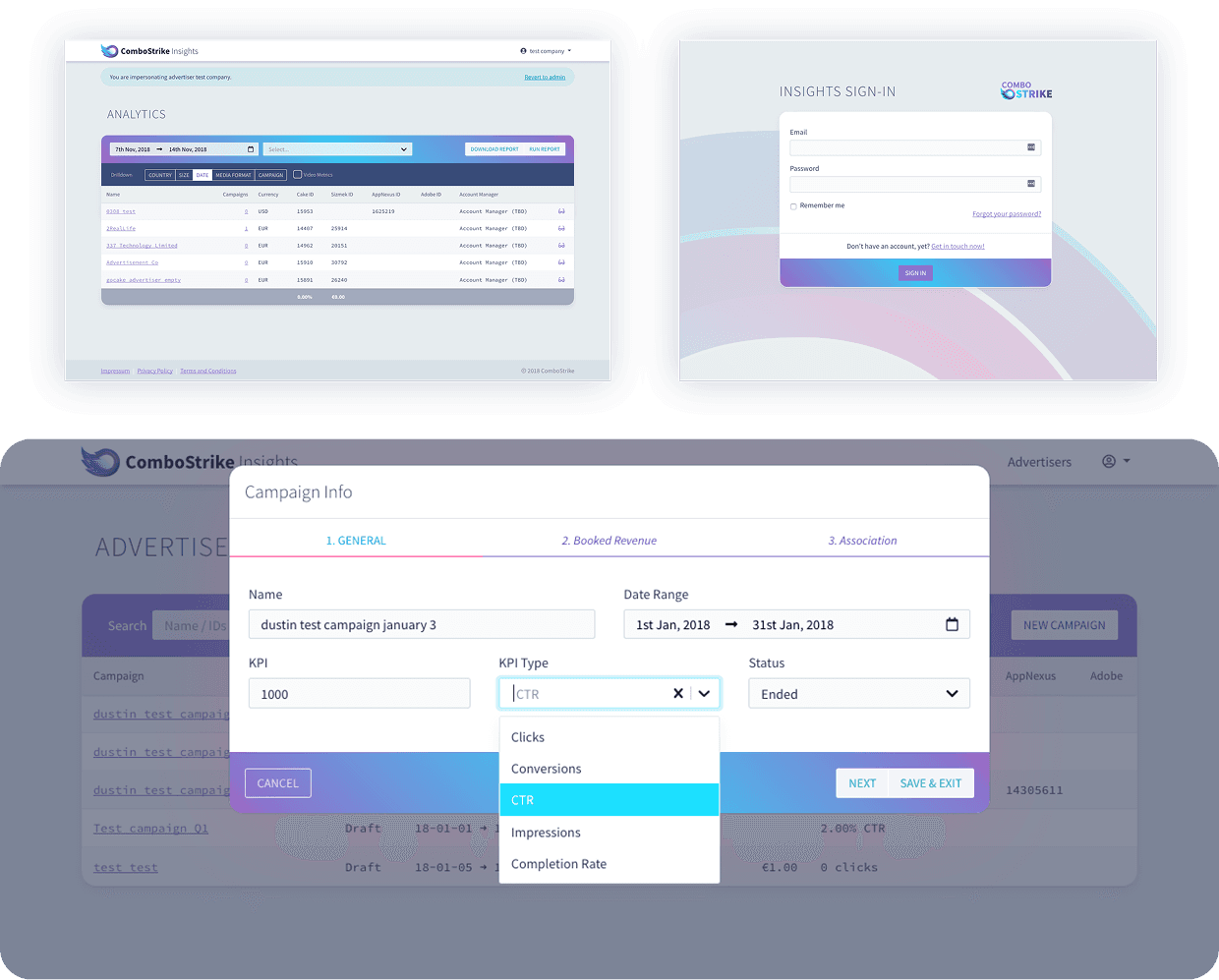
A reporting and campaign-management interface for ComboStrike Insights, supporting advertiser workflows around campaign setup, KPIs, reporting, and analytics access.
I created a style guide to provide brand and design guidelines, document the emerging design system, and serve as developer documentation for the cross-platform compornent library.
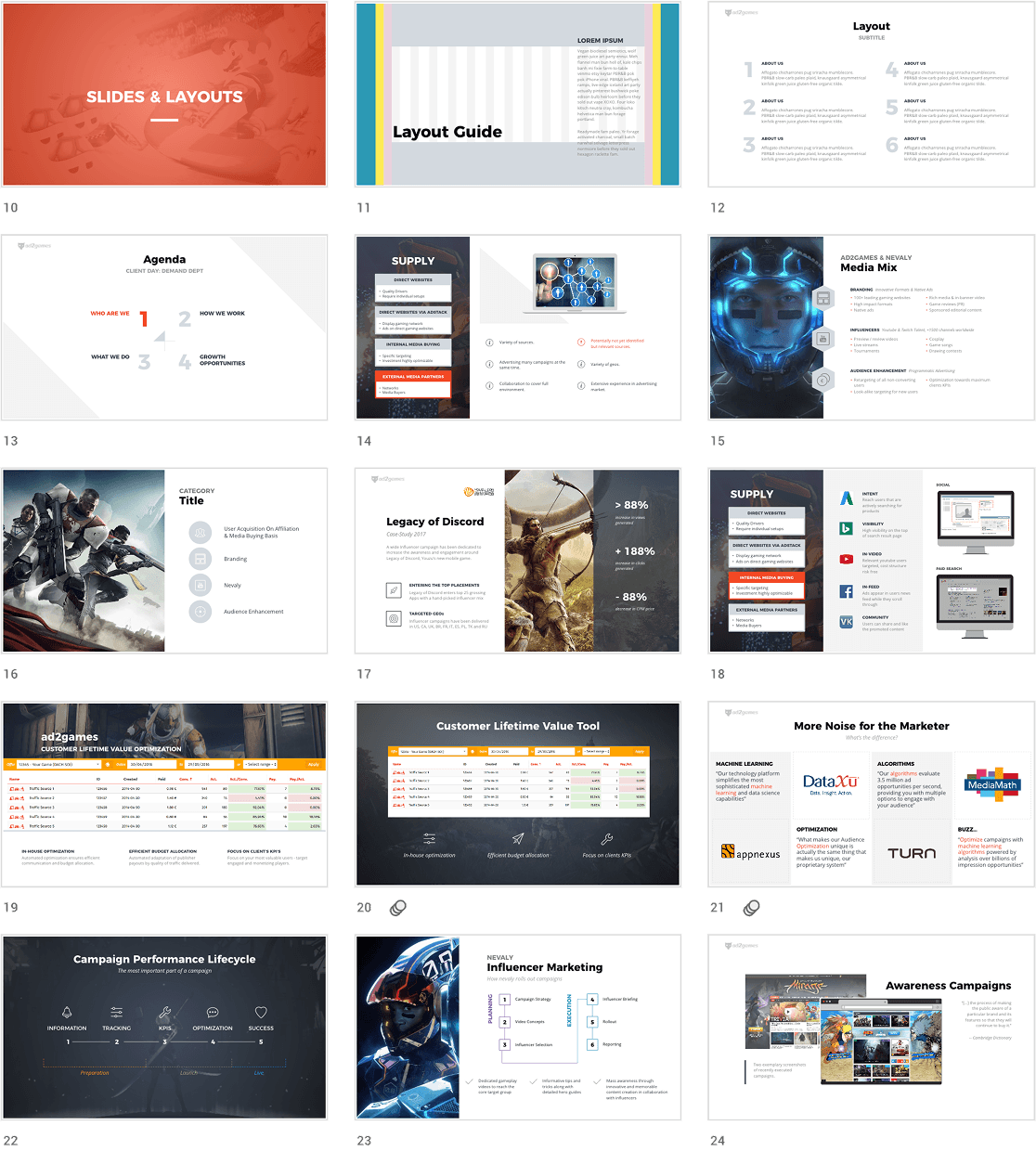
A presentation framework and slide system for Ad2games, supporting reusable sales and client decks across campaign strategy, media mix, performance, and game marketing topics. Prior to this template framework, there was no unifying quality, structure or aesthetic to company presentations, which varied significantly depending on the author. The framework was hugely popular, and gained rapid adoption. I was able to extend and iterate as further presentation needs surfaced.
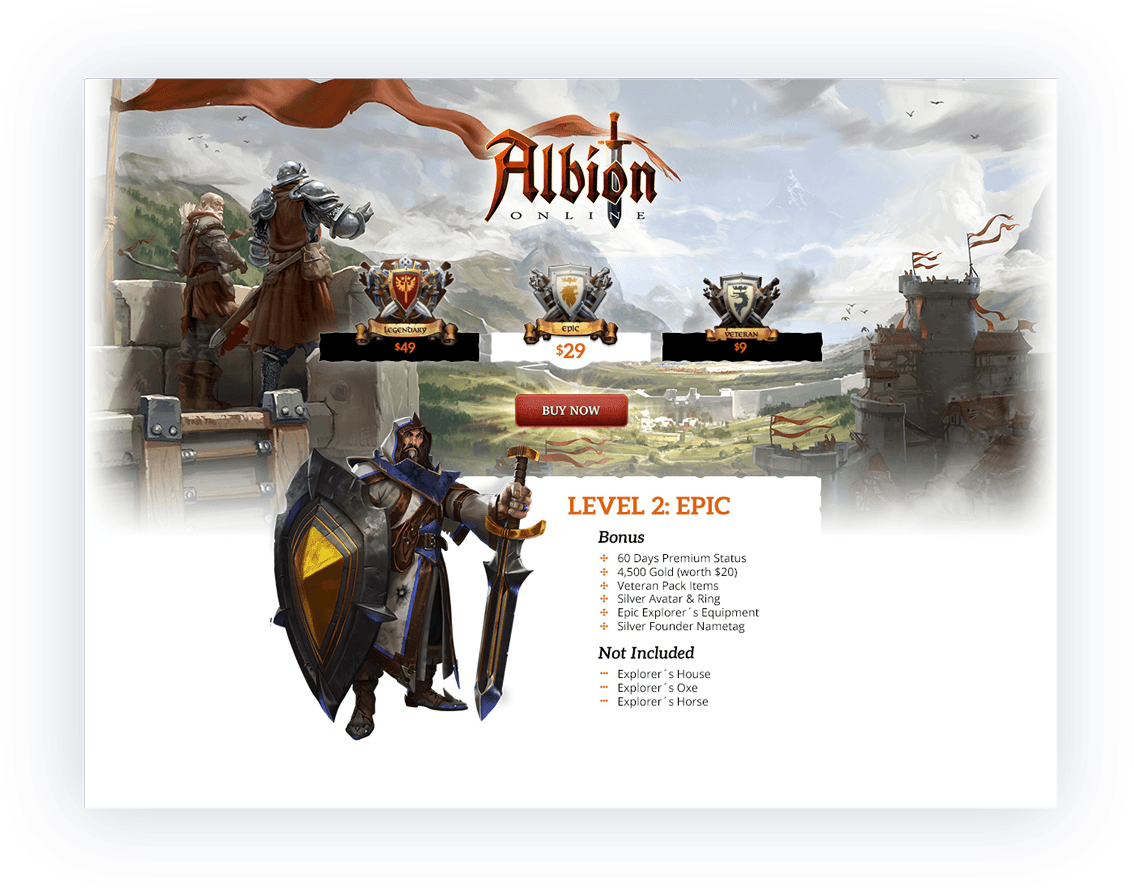
A simple promotional landing page for Albion Online, presenting tiered packages, pricing, and a call-to-action. The background was actually animated. I designed and coded the page, but did not create or design any of the visual assets, which were provided by the publisher at the beginning of the project.
An influencer marketing dashboard for managing signed campaigns, platform channels, creator metrics, budgets, and campaign configuration within Nevaly.
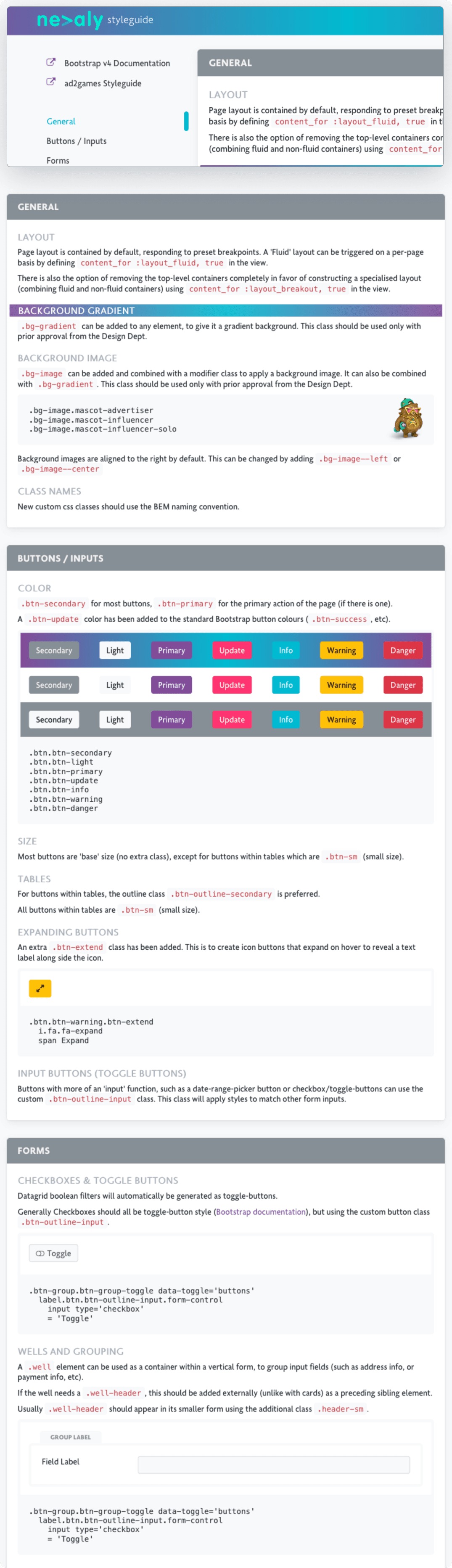
I also created the Nevaly style guide. This snapshot combines several sections covering layout, buttons, inputs, forms, and developer-focused front-end component documentation.
A collection of some of the first work I did at Ad2games -- interactive advertising widget formats for game promotion, showing reusable layouts for rankings, recommendations, banners, game sections, and conversion-focused calls to action. Many were specifically designed for seamless integration with a specific host website, hence the aesthetic variety. I coded each of them using 'liquid' templating language, hooking into our backend and CDN for retrieving assets, and language translations. This formed the core of the early Ad2games business.
Logo exploration for ComboStrike, moving from diverse concepts toward a more focused identity for the newly created games influencer marketing agency.
An influencer marketing dashboard for managing signed campaigns, platform channels, creator metrics, budgets, and campaign configuration within Nevaly.
I created a style guide to provide brand and design guidelines, document the emerging design system, and serve as developer documentation for the cross-platform compornent library.
I designed and coded the front-end for the Ad2games website, presenting the company’s game marketing offering, publisher and advertiser value propositions, client testimonials, portfolio of notable games, news, and contact paths.
A collection of some of the first work I did at Ad2games -- interactive advertising widget formats for game promotion, showing reusable layouts for rankings, recommendations, banners, game sections, and conversion-focused calls to action. Many were specifically designed for seamless integration with a specific host website, hence the aesthetic variety. I coded each of them using 'liquid' templating language, hooking into our backend and CDN for retrieving assets, and language translations. This formed the core of the early Ad2games business.
A simple promotional landing page for Albion Online, presenting tiered packages, pricing, and a call-to-action. The background was actually animated. I designed and coded the page, but did not create or design any of the visual assets, which were provided by the publisher at the beginning of the project.
A reporting and campaign-management interface for ComboStrike Insights, supporting advertiser workflows around campaign setup, KPIs, reporting, and analytics access.
An initial landing-page concept for ComboStrike Group, introducing a gaming-focused marketing agency and its related brands while leaving room for future expansion.
I also created the Nevaly style guide. This snapshot combines several sections covering layout, buttons, inputs, forms, and developer-focused front-end component documentation.
A presentation framework and slide system for Ad2games, supporting reusable sales and client decks across campaign strategy, media mix, performance, and game marketing topics. Prior to this template framework, there was no unifying quality, structure or aesthetic to company presentations, which varied significantly depending on the author. The framework was hugely popular, and gained rapid adoption. I was able to extend and iterate as further presentation needs surfaced.
A minimal landing page for Nevaly, when the company was first launched, positioning the platform as a way for YouTube, Twitch, and streaming creators to connect with games publishers and monetise content. The background was a looped video of promoted Twitch streams, with a stylised overlay pattern to disguise compression artefacts and maintain focus on the foreground interface. I designed and coded the page.

Contact

Email: matthew.correia@gmail.com

Social: LinkedIn

Location: Berlin, Germany