04
ROLE
End-to-end product and UX design, from concept exploration to delivery support
SCOPE
Requesting, confirming, and tracking user acknowledgment of published updates
FOCUS
Lightweight, scalable UX, natively integrated into Hub
OUTCOME
Delivered a new compliance feature and established a scalable pattern for similar governance capabilities in the suite
01 / PROBLEM
Some customers, especially in regulated environments, needed a reliable way to confirm that employees had read and understood newly published or updated processes. Within the suite, there was no native feature for requesting and tracking that acknowledgment.
The challenge was to introduce this capability in a way that felt simple and proportional to the task. A workflow-based approach would have added unnecessary overhead, while a lighter feature still needed to support notifications, accountability, progress tracking, and auditing.
02 / PROCESS
I began by clarifying the core use cases and mapping the feature across what emerged as two main roles: Process Owners, who create and monitor requests, and Process Consumers, who receive and confirm them.
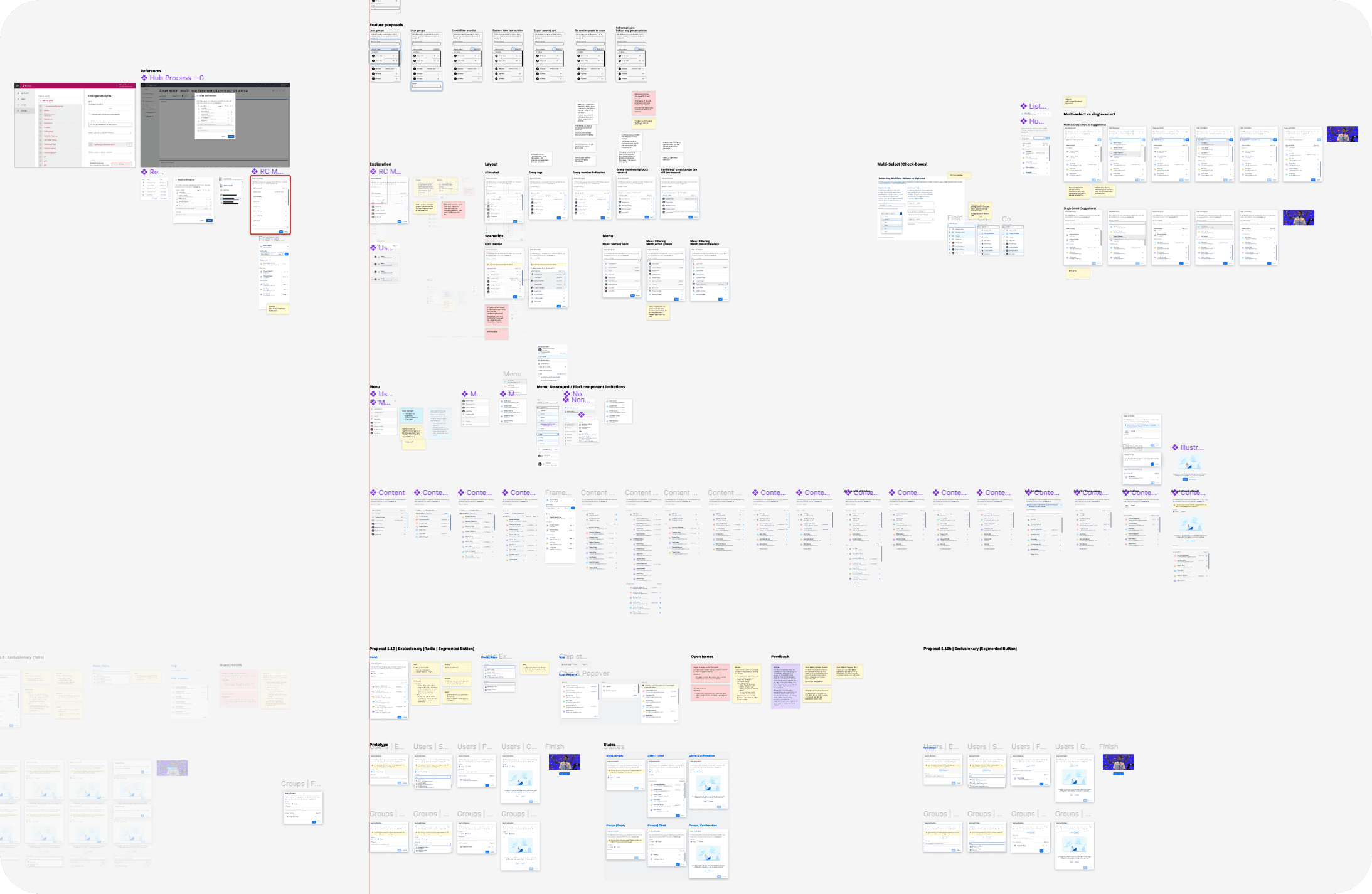
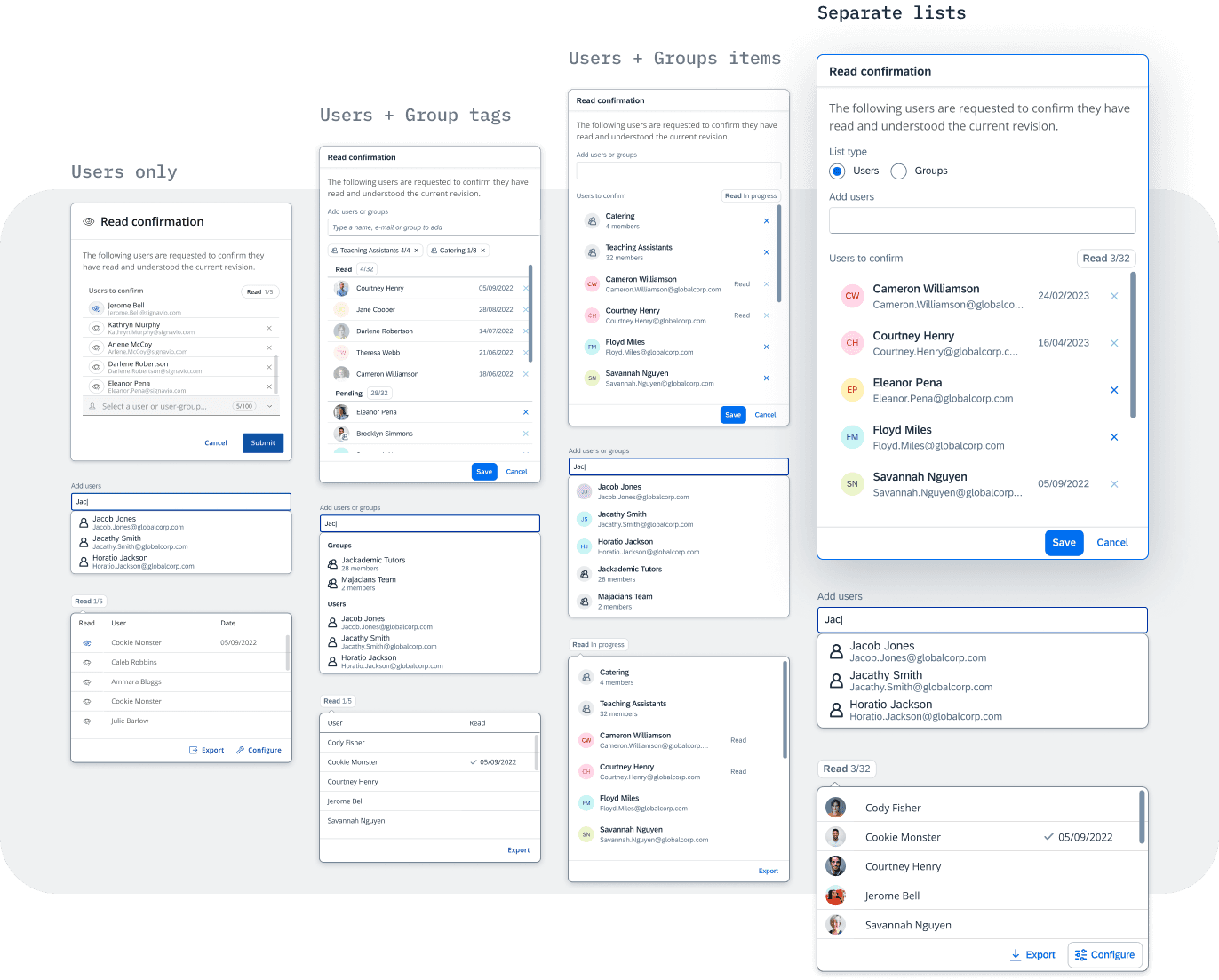
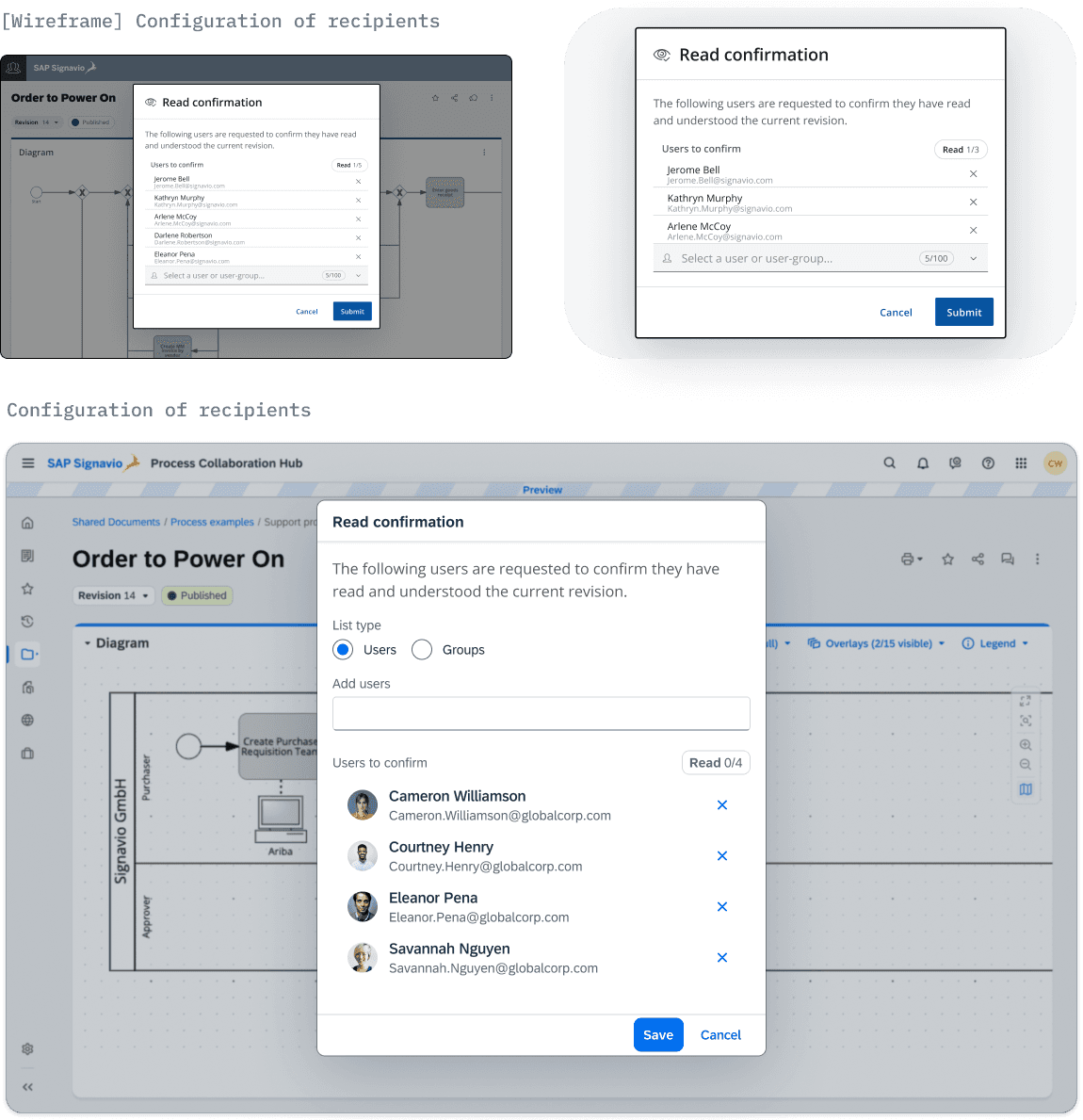
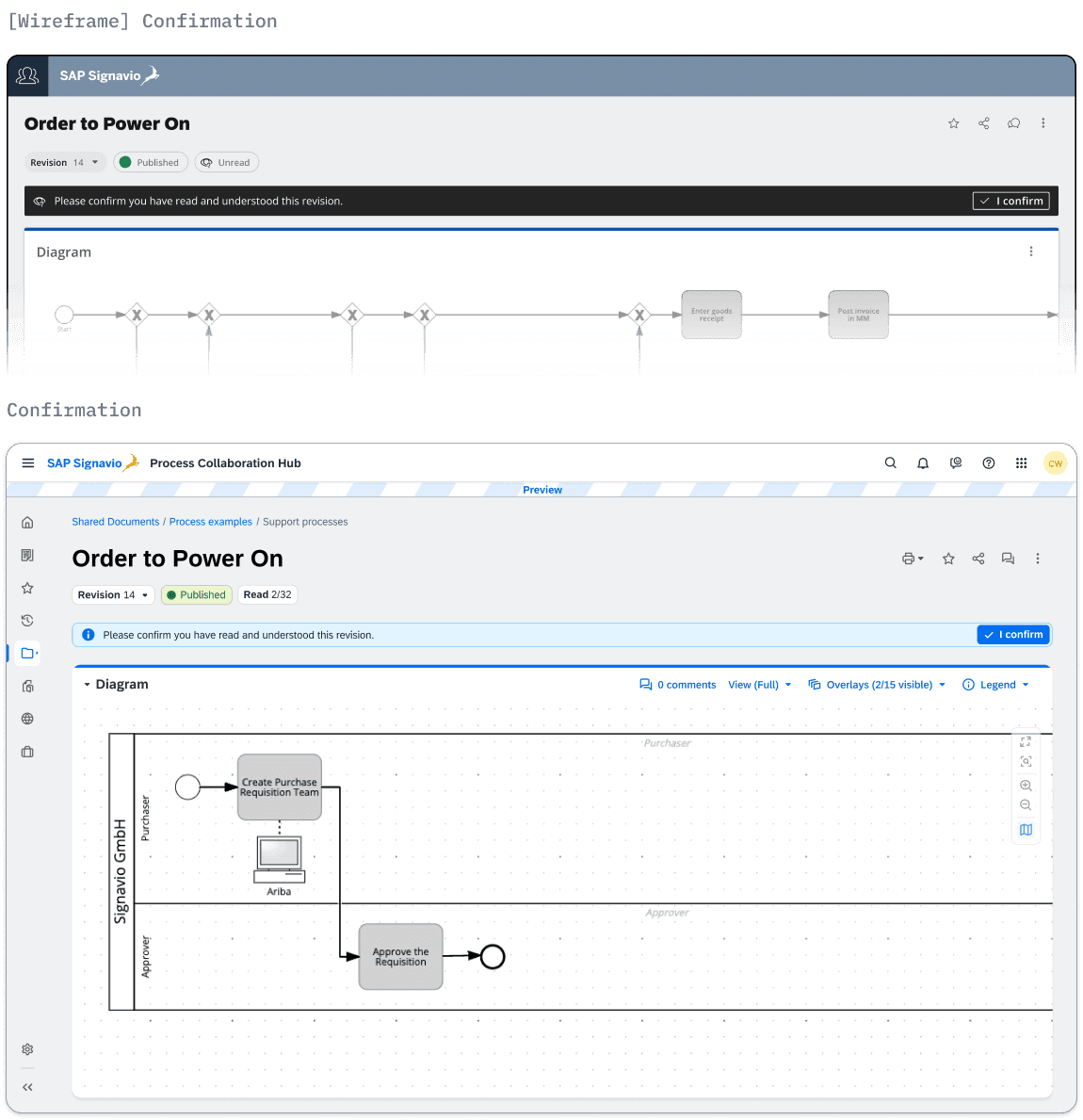
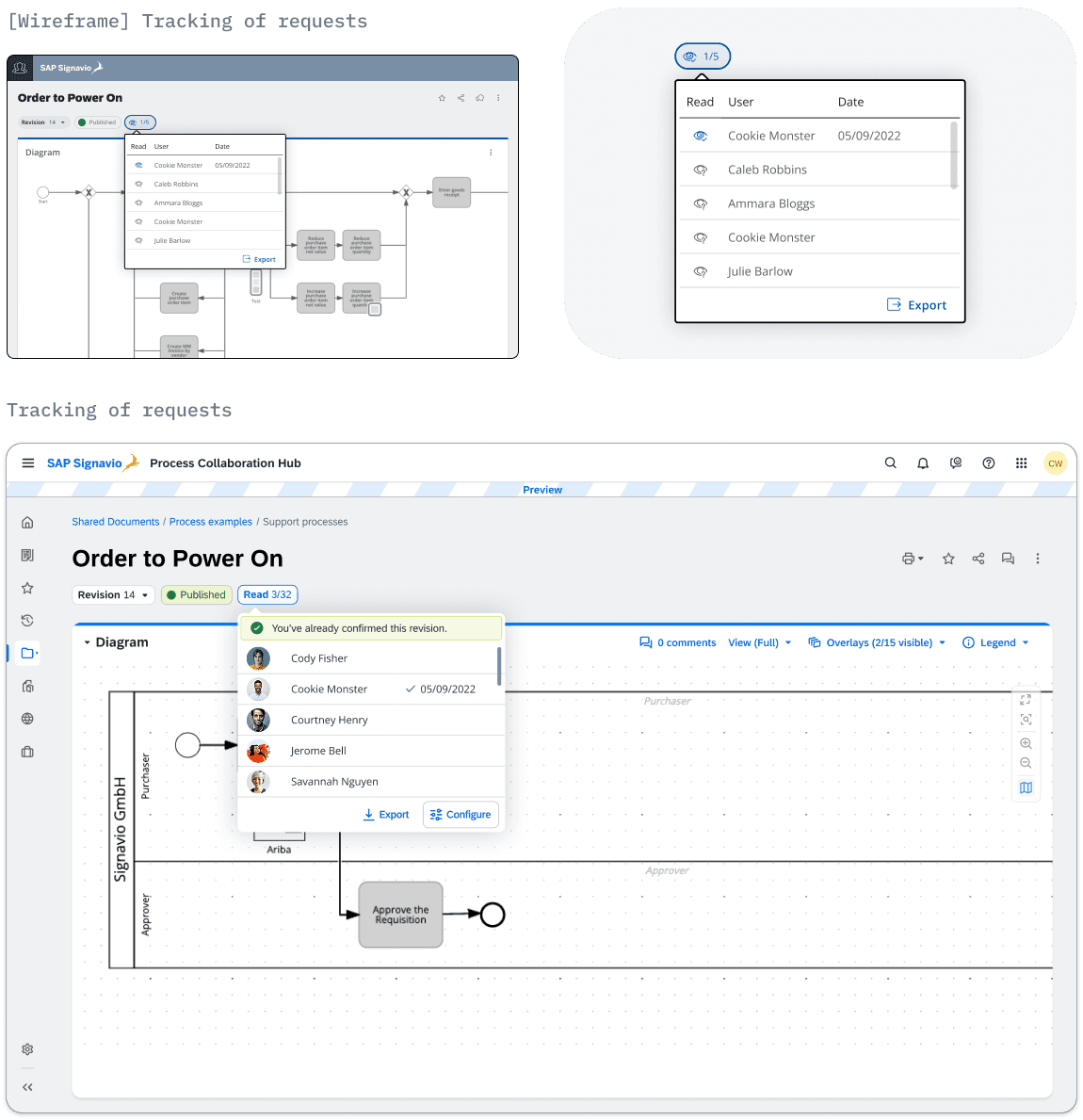
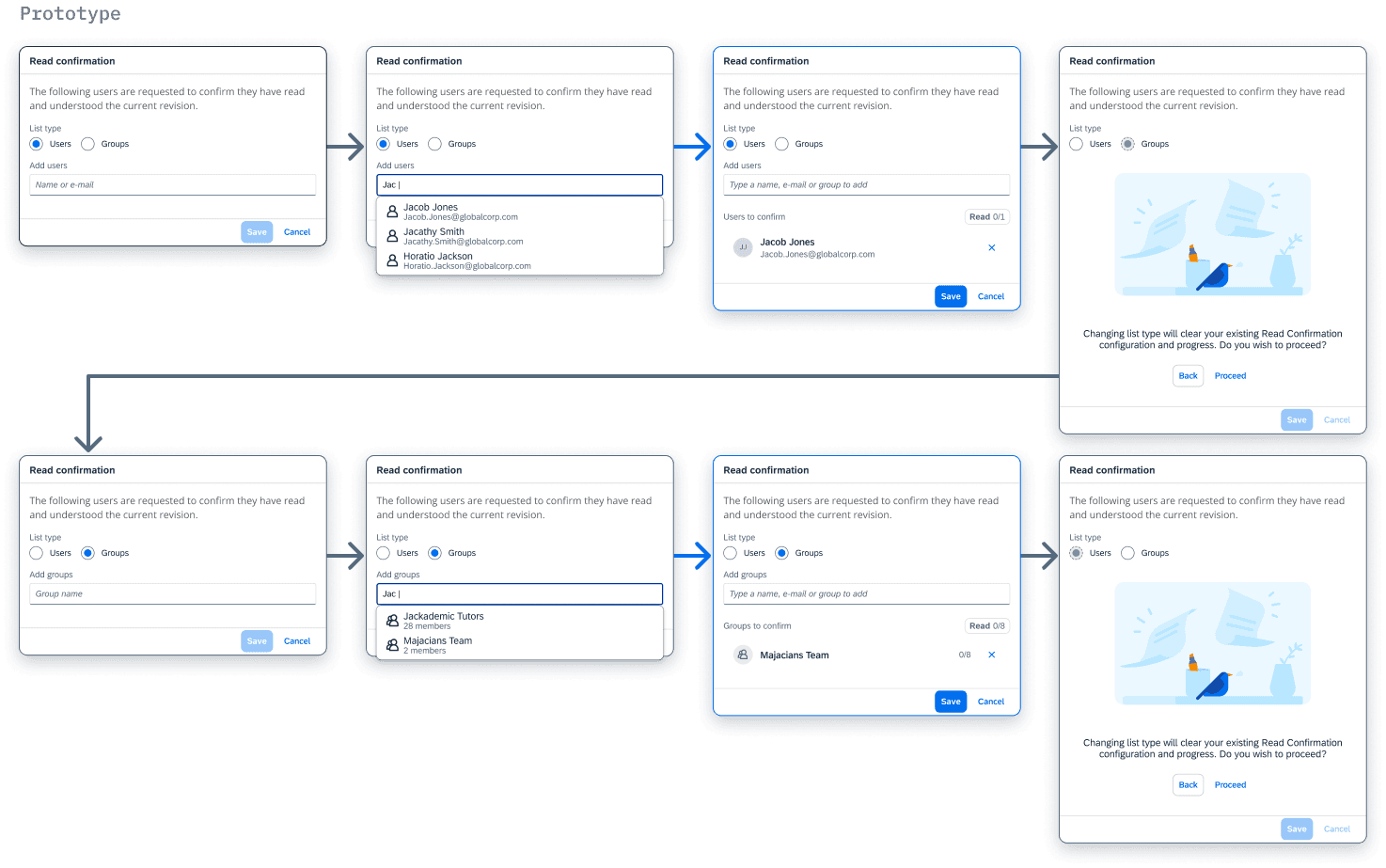
Using rapid wireframes, key screens, and prototypes, I explored how recipients should be assigned, how notifications and confirmations should work, and how progress should be tracked in a concise way. This helped align the concept across product, engineering, and stakeholder discussions while moving quickly toward a deliverable solution.
Because the feature connected Governance and Hub contexts, close collaboration with engineering was important throughout. We iterated on the design against technical and privacy constraints, and shifting frameworks (including the incoming SAP design system), refining both the interaction model and the detailed UI as implementation became clearer.
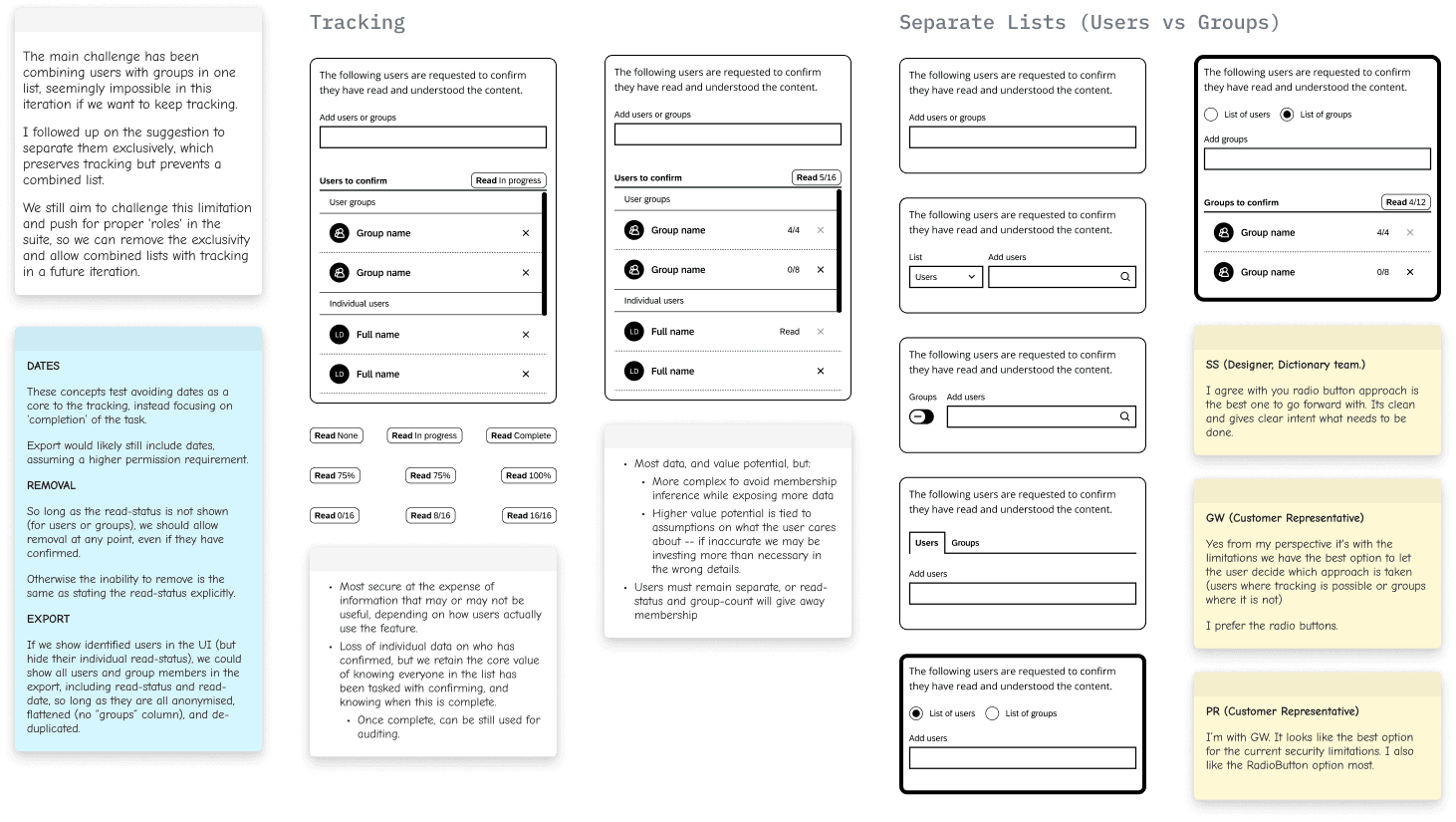
The initial release focused on individual users, which provided the clearest and most direct version of the feature, and helped prioritise follow-up development based on early feedback. I also explored likely follow-up extensions, primarily integrating user groups, user tasks, and richer reporting, helping ensure the concept could scale while preserving the same lightweight core flow.
03 / SOLUTION
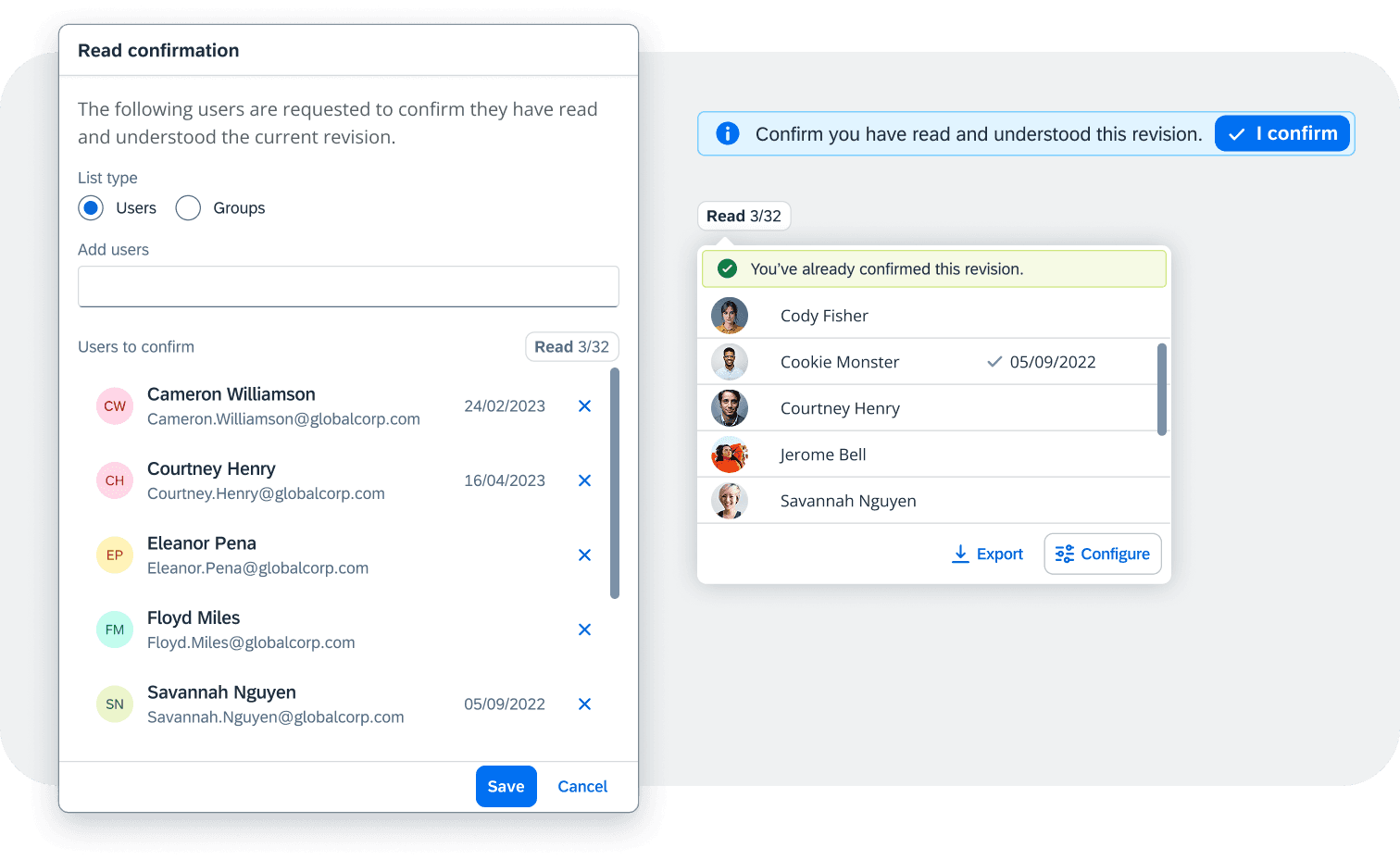
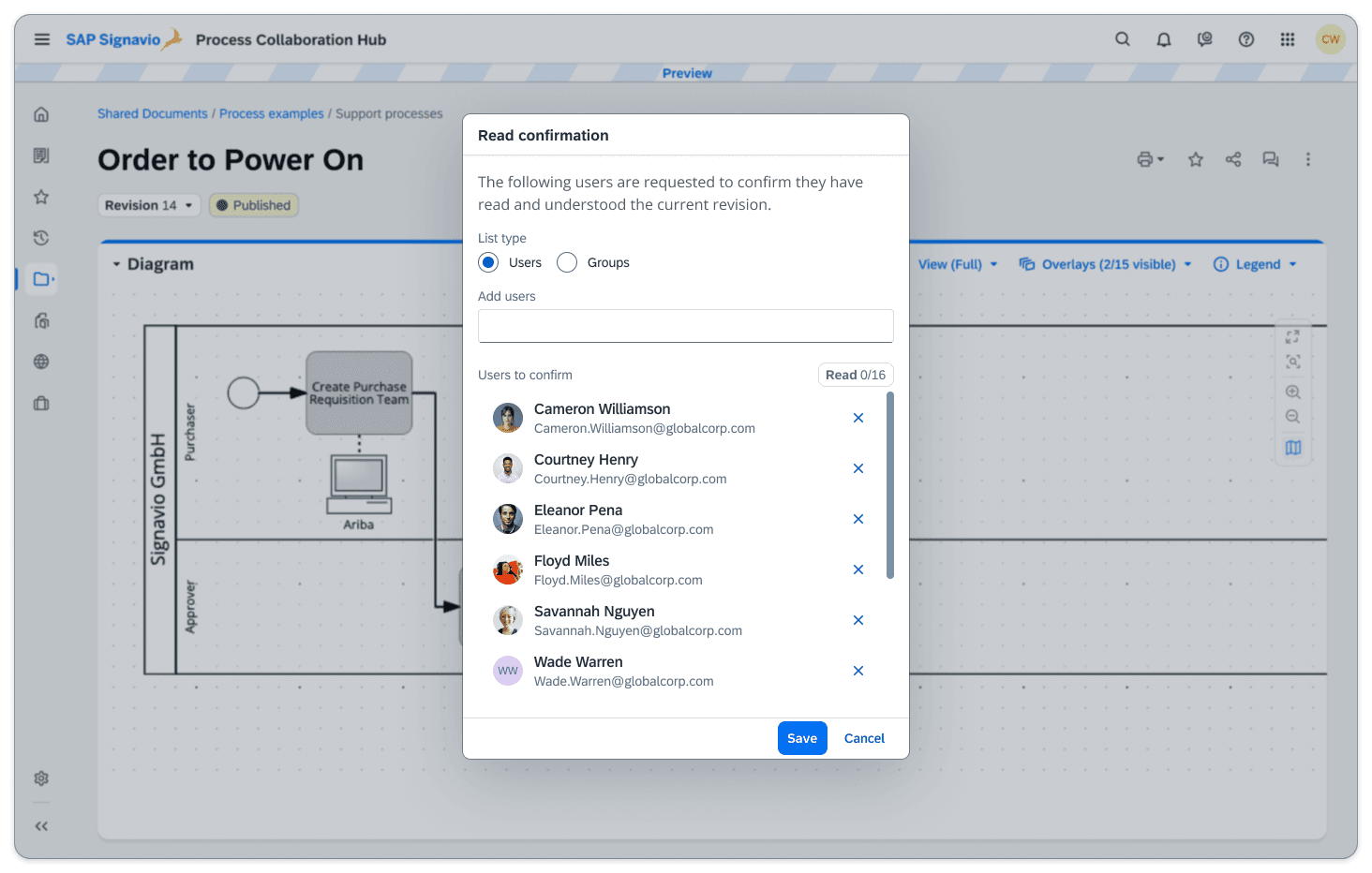
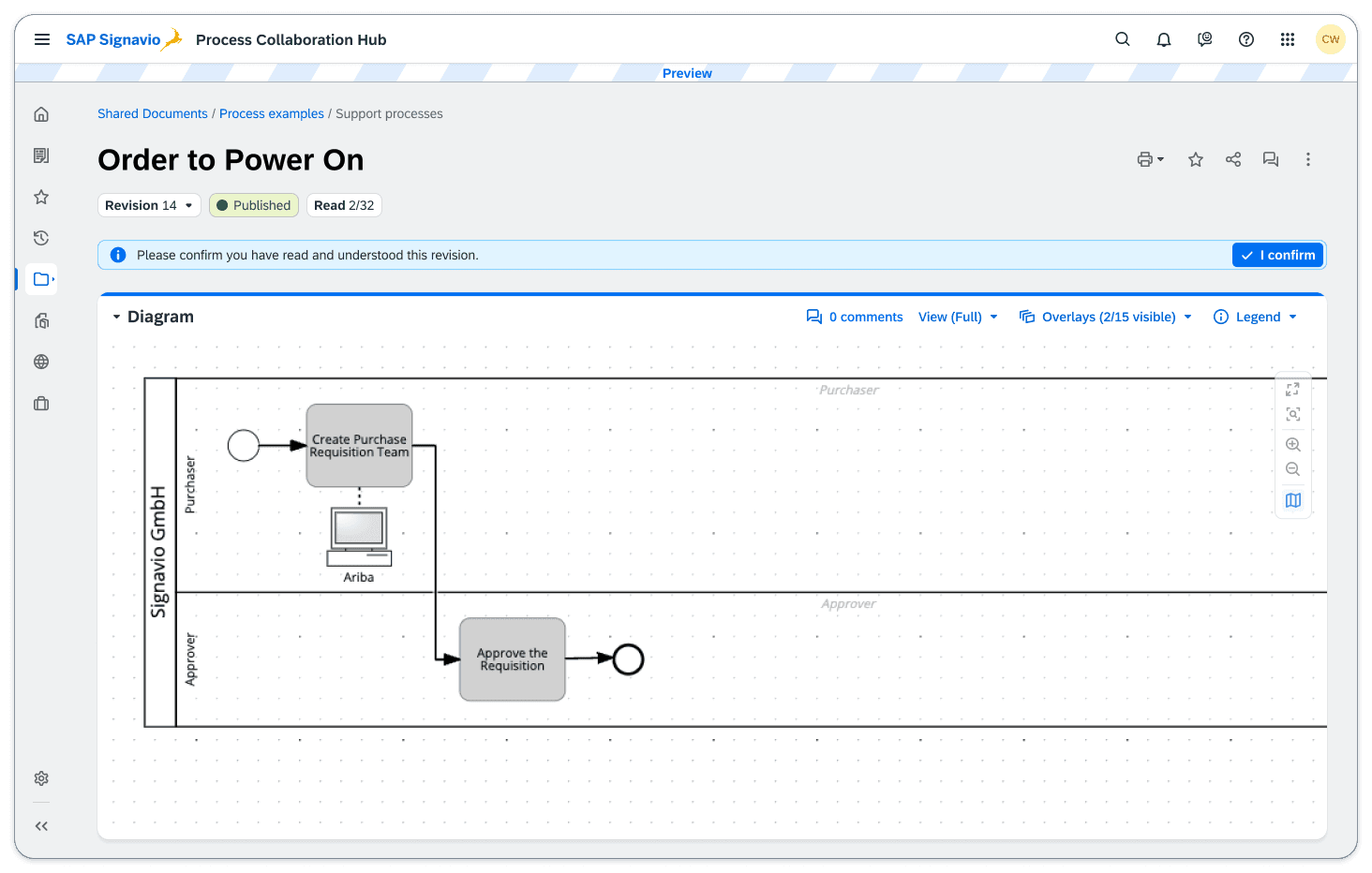
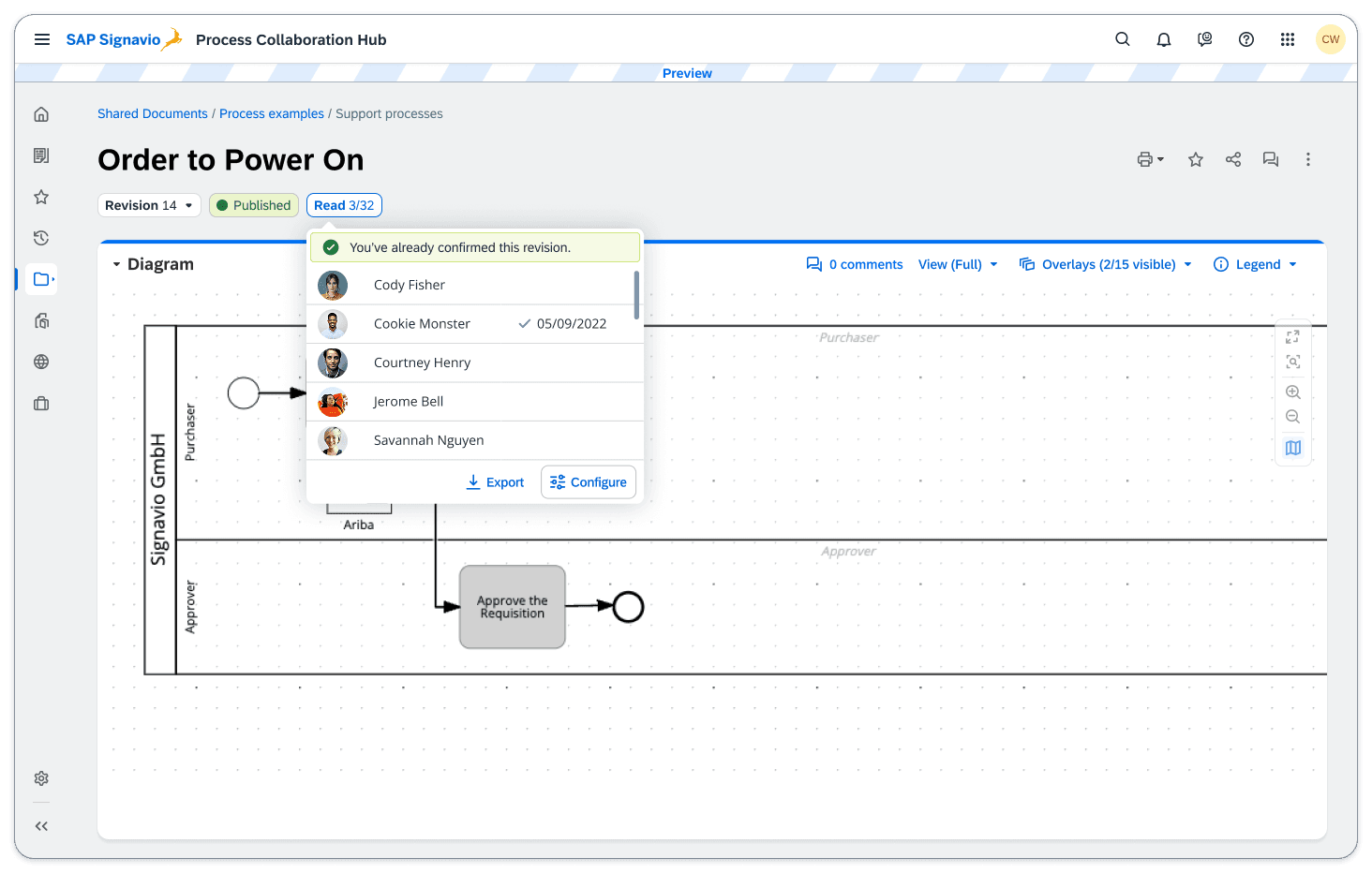
Read confirmation was introduced directly within Process Collaboration Hub as a native capability for published revisions, without requiring a workflow. Process Owners could request confirmation via a dedicated action, assign recipients, notify them, and track completion from a concise monitoring view. Process Consumers received a simple notification-driven flow with one-click confirmation.
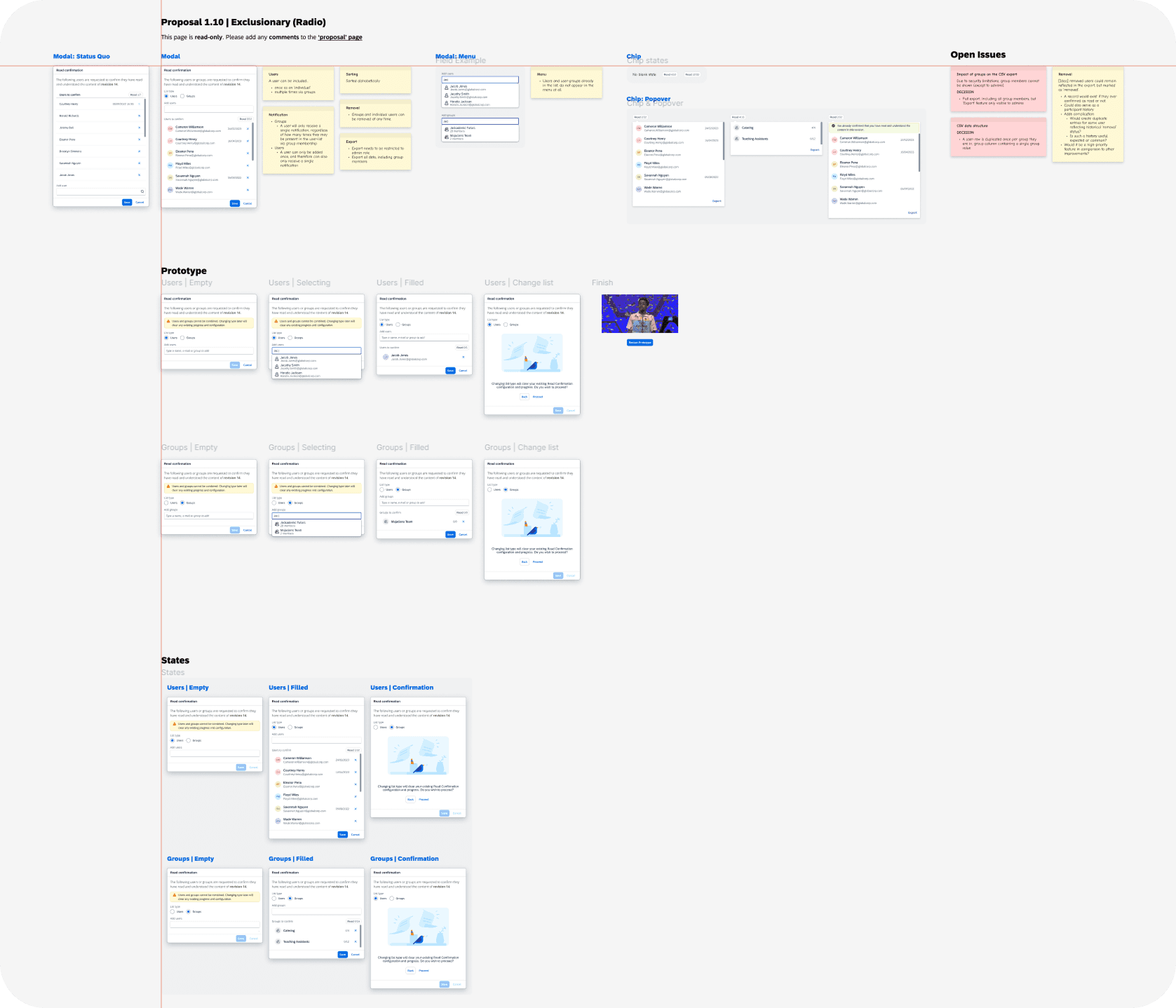
The initial release focused on individual users, providing the clearest and most direct version of the feature. This was followed shortly by an extension to support user groups, enabling efficient multi-user targeting while maintaining the same core interaction pattern.
The design established a compact and extensible pattern for lightweight governance actions integrated within Process Collaboration Hub.
04 / OUTCOME
Customers gained a native way to request and track acknowledgment of process updates directly within the suite, with clear visibility of progress and completion.
The design supports further extensions such as user tasks, reminders, and richer reporting. It also sets a pattern for how lightweight governance features can be embedded directly into the publication experience, rather than relying on more cumbersome workflow-based approaches.